
- Foundation
- About 12 min
- 5 practice questions
Reading a table: most, least, more and less
Read a data table to find the most and least liked choices, and compare two choices using more than, less than and equal to.
If something looks wrong, please tell us.
By the end of this lesson you can
- Find the most liked choice.
- Find the least liked choice.
- Compare two choices.
A table tells a story. Let us read it to answer questions.
Most and least
| Fruit | Number of children |
|---|---|
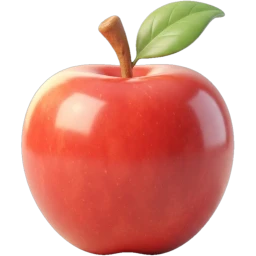 Apple | 4 |
 Banana | 6 |
| Guava | 4 |
| Orange | 3 |
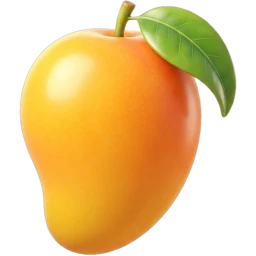 Mango | 7 |
The biggest number shows the most liked. Here it is mango, with 7. The smallest number shows the least liked. Here it is orange, with 3.
Comparing two choices
-
More than
- Banana 6 is more than apple 4
-
Equal to
- Apple 4 is equal to guava 4
-
Less than
- Orange 3 is less than apple 4
Let us try 1: how many more?
How many more children like mango than banana? Step 1: mango is 7, banana is 6. Step 2: 7 − 6 = 1. Answer: 1 more child likes mango.
Let us try 2: two together
How many children like apple or guava? Step 1: apple is 4, guava is 4. Step 2: 4 + 4 = 8. Answer: 8 children.
Biggest number = most liked. Smallest number = least liked.
Try it at home
Do this at home with a grown-up.
- Ask your grown-up to write a small table of family snacks.
- Use made-up numbers for each snack.
- Find the most and least liked.
- Make one sentence with "more than".
For the grown-up: Ask "how do you know?" so your child points to the numbers in the table.
Key takeaways
- The biggest count is the most liked.
- The smallest count is the least liked.
- Use more than, less than or equal to compare.
Check your understanding
-
1. In the fruit table, which fruit is most liked?
- Banana
- Mango
- Apple
Show answer
Answer: B. Mango has 7, the biggest number. So it is most liked.
-
2. Which fruit is least liked?
- Orange
- Guava
- Apple
- Banana
Show answer
Answer: A. Orange has 3, the smallest number. So it is least liked.
-
3. Apple has 4 and guava has 4. Apple is ___ guava.
- more than
- less than
- equal to
Show answer
Answer: C. 4 and 4 are the same. So apple is equal to guava.
-
4. How many more children like banana than orange?
- 9
- 2
- 6
- 3
Show answer
Answer: D. Banana is 6, orange is 3. 6 − 3 = 3 more.
-
5. How many children are in the whole table?
- 7
- 24
- 21
- 20
Show answer
Answer: B. 4 + 6 = 10. 10 + 4 = 14. 14 + 3 = 17. 17 + 7 = 24 children.
Sign in to keep track of the lessons you finish.