
- Foundation
- About 12 min
- 5 practice questions
Sorting things into groups
Sort everyday things into groups in different ways and record how many are in each group in a table.
If something looks wrong, please tell us.
By the end of this lesson you can
- Sort things into two groups using one rule.
- Sort the same things again using a different rule.
- Record counts in a simple table.
Look around your home. There is a fan, a pillow, a clock and a chair. We can put these things into groups. The fun part is that the same things can be grouped in more than one way!
One rule, two groups
A rule tells us where each thing goes. Let us use the rule: does it need electricity to work?
Grouping by electricity
-
Needs electricity
- Fan
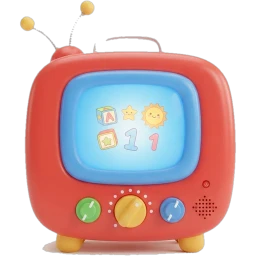 Television
- Fridge
- Tube light
-
Does not need electricity
- Pillow
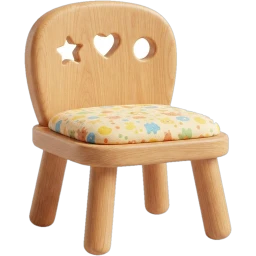 Chair
- Bucket
- Broom
A good sorting rule puts every thing into exactly one group. Then nothing is left out and nothing is counted twice.
Let us try 1: a new rule for the same things
Take the same eight things. Now use a new rule: is it used for cleaning?
Is it used for cleaning? Yes: broom, bucket. No: fan, television, fridge, tube light, pillow, chair.
Now the groups have 2 things and 6 things. Groups do not need to be the same size. Check the total: 2 + 6 = 8, so nothing was left out.
Let us try 2: making a table
Sneha looked at how her cousins wear their hair at a family wedding. She made one mark for each cousin.
| Hair style | Marks | Number of children |
|---|---|---|
| Two plaits | | | | | 3 |
| One ponytail | | | | | | 4 |
| Short hair | | | | | | | 5 |
How many cousins in all? 3 + 4 + 5 = 12. Short hair is the most common style.
Many ways to sort
Some rules are not clear. 'Is it nice?' gets different answers from different people. Things can be sorted by colour, by size, by what they are made of, or by where we keep them. There is no single right way. A rule just has to be clear, so everyone puts each thing in the same group.
For the grown-up: Ask 'Can you sort them another way?' many times. Choosing and testing rules is real mathematical thinking.
Try at home with a grown-up
Shoe sort. Gather all the footwear near your door. First, sort it into 'with laces' and 'without laces'. Then mix it up and sort again by colour. Make marks and fill a small table: how many in each group? Do your totals match each time?
Key takeaways
- A sorting rule puts each thing into exactly one group.
- The same things can be sorted in many ways.
- A table with marks and numbers shows how many are in each group.
Check your understanding
-
1. Which thing goes in the group 'needs electricity'?
- Pillow
- Broom
- Mixer grinder
- Bucket
Show answer
Answer: C. A mixer grinder must be plugged in to work, so it needs electricity. A pillow, a broom and a bucket do not.
-
2. Which thing goes in the group 'does not need electricity'?
- Fan
- Fridge
- Television
- Chair
Show answer
Answer: D. A chair works without any electricity. A fan, a fridge and a television all need it.
-
3. What makes a sorting rule good?
- Every thing fits into exactly one group
- Some things fit nowhere
- Some things fit in two groups
- It uses only red things
Show answer
Answer: A. With a clear rule, each thing goes into exactly one group, so nothing is left out or counted twice.
-
4. In a table, 4 children wear plaits, 6 wear ponytails and 2 have short hair. How many children are there in all?
- 10
- 12
- 8
- 14
Show answer
Answer: B. Add all the groups: 4 + 6 + 2 = 12 children.
-
5. Mohit sorted 9 toys into 'has wheels' and 'no wheels'. 5 toys have wheels. How many have no wheels?
- 5
- 3
- 4
- 9
Show answer
Answer: C. All 9 toys are in one of the two groups. 9 take away 5 is 4, so 4 toys have no wheels.
Sign in to keep track of the lessons you finish.