
- Foundation
- About 12 min
- 5 practice questions
The metre
Learn why everyone needs the same unit, make a one-metre rope, and sort things into longer than, shorter than and about one metre.
If something looks wrong, please tell us.
By the end of this lesson you can
- Explain why we need a unit that is the same for everyone.
- Make a rope that is one metre long.
- Sort objects into more than, less than and about one metre.
Hand spans and footsteps are different for different people. A tailor and a shopkeeper need a unit that is the same for everyone. That unit is the metre.
Why a standard unit?
Leena's saree for the class play is long. Measuring it with a pencil takes ages. A paper strip twice as long is better, but still slow. Shopkeepers measure cloth with a metre rod. Every metre rod is the same length, so everyone agrees.
A metre is a standard unit of length. One metre is the same for everyone, everywhere.
Make a metre rope
- Take a metre rod or a measuring tape, and a rope or thick thread.
- Tie a knot at one end of the rope.
- Lay the rope along the metre rod, with the knot at the start.
- Tie a second knot exactly at the one-metre mark.
- Check it again. The part between the knots is one metre.
Making a metre rope
- Knot at one end
- Lay it along a metre rod
- Knot at the 1 metre mark
- Check again
Let us try 1: more or less than a metre?
Shelly holds up the metre rope beside some things.
A classroom door is more than one metre tall. A school bag is less than one metre long. A big step for a grown-up may be about one metre.
Let us try 2: heights
Mark 1 metre on a wall with a grown-up's help. Children stand against it.
Most Class 3 children are a little more than one metre tall. Younger children may be less than one metre. Use the mark to see who is taller.
| Less than 1 metre | About 1 metre | More than 1 metre |
|---|---|---|
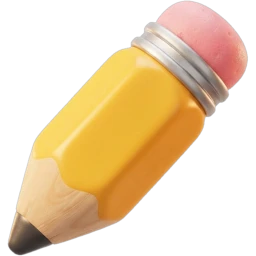 A pencil | A walking stick | 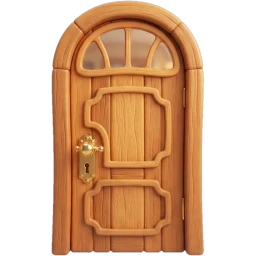 A door |
| A water bottle | A big stride |  A bed |
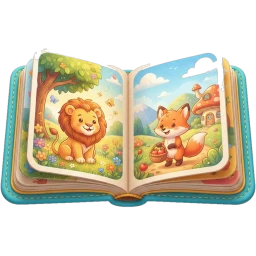 A book | A small child's height | A classroom wall |
For the grown-up: If you have a tailor's tape, show the 1 metre mark. Let your child compare it with your height and their own.
Try at home with a grown-up
Metre hunt. With a grown-up, make a metre rope or use a measuring tape. Find 3 things longer than a metre, 3 things shorter, and 1 thing about a metre long. Draw them in three columns.
Key takeaways
- Body units differ; a metre is the same for everyone.
- A metre rope is made by marking 1 metre from a metre rod.
- Sort things as less than, about, or more than 1 metre.
Check your understanding
-
1. Why do shopkeepers use a metre rod instead of hand spans?
- Hand spans are too long
- Metre rods are pretty
- Everyone's metre is the same length
- Hand spans are not allowed
Show answer
Answer: C. Hand spans differ from person to person. A metre is a standard unit, the same for everyone.
-
2. Which is MORE than one metre long?
- A pencil
- A bed
- A spoon
- An eraser
Show answer
Answer: B. A bed is longer than a metre. A pencil, a spoon and an eraser are much shorter.
-
3. Which is LESS than one metre long?
- A water bottle
- A classroom wall
- A bus
- A door
Show answer
Answer: A. A water bottle is far shorter than a metre. The others are longer.
-
4. How do you make a metre rope?
- Guess a length
- Use your hand spans
- Use a long stick from outside
- Lay the rope along a metre rod and tie knots at both ends of the metre
Show answer
Answer: D. Laying the rope along a metre rod and knotting it at the start and at the 1 metre mark gives exactly one metre.
-
5. What is a metre?
- A unit of length that is the same for everyone
- A kind of rope
- The length of a footstep
- A hand span
Show answer
Answer: A. A metre is a standard unit for measuring length.
Sign in to keep track of the lessons you finish.