
- Foundation
- About 12 min
- 5 practice questions
The kilogram and balance puzzles
Learn the kilogram, a unit for weight that is the same for everyone, find things lighter or heavier than 1 kilogram, and solve pan-balance puzzles.
If something looks wrong, please tell us.
By the end of this lesson you can
- Say what a kilogram is and why we use it.
- Guess if things are more or less than 1 kilogram.
- Use a pan balance cleverly to find the heaviest of three bags.
Coins and matchboxes help, but shops need a unit that is the same everywhere. For weight, that unit is the kilogram, written kg. Many packets of salt, sugar or flour say '1 kg' on them.
Feel a kilogram
Hold a 1 kg packet of salt in your hand. That is how heavy 1 kilogram feels. Now hold a pencil: much less than 1 kg. A big pumpkin may be more than 1 kg.
| Less than 1 kg | More than 1 kg |
|---|---|
 A pencil | A school bag full of books |
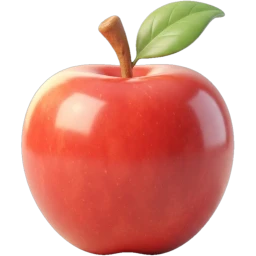 An apple | A big watermelon |
| A spoon | A sack of rice |
A kilogram (kg) is a standard unit of weight. 2 half kilograms make 1 kg. 4 quarter kilograms make 1 kg.
Let us try 1: packets on a balance
A 1 kg salt packet is in one pan. Two packets of dal balance it.
So each dal packet is half a kilogram. If four tea packets balance it, each tea packet is a quarter kilogram.
Puzzle: find the heavy bag
Three small bags of rice look the same. One is heavier; the other two weigh the same. You have a pan balance but no weights. Can you find the heavy bag by weighing just once?
One weighing is enough
- Put bag A and bag B on the pans Leave bag C aside
- If one pan goes down That bag is the heavy one
- If the bar is level A and B are equal, so C is the heavy one
Let us try 2: ordering three toys
A red, an orange and a green toy all weigh different amounts. Compare red and orange: red goes down. Compare orange and green: orange goes down.
So red is heavier than orange, and orange is heavier than green. Heaviest: red. Lightest: green.
For the grown-up: Let your child hold packets labelled 1 kg, 500 g and 250 g. These are 1, a half and a quarter kilogram.
Try at home with a grown-up
Kilogram guess. With a grown-up, find a 1 kg packet of salt, sugar or flour. Hold it in one hand. Then hold other things in your other hand: an apple, a water bottle, a book. Is each one more or less than 1 kg? Check labels where you can.
Key takeaways
- A kilogram is a standard unit for weight.
- 2 half kg = 1 kg; 4 quarter kg = 1 kg.
- A pan balance can find the heavy bag in one weighing.
Check your understanding
-
1. Which is likely to weigh LESS than 1 kg?
- A sack of rice
- A big watermelon
- A pencil
- A school bag full of books
Show answer
Answer: C. A pencil is very light, much less than 1 kg.
-
2. Two dal packets balance a 1 kg salt packet. How much is one dal packet?
- 1 kg
- Half a kilogram
- A quarter kilogram
- 2 kg
Show answer
Answer: B. Two equal packets make 1 kg, so each is half a kilogram.
-
3. How many quarter kilograms make 1 kg?
- 2
- 3
- 8
- 4
Show answer
Answer: D. 4 quarter kilograms make 1 kilogram.
-
4. Three bags look the same; one is heavier. You weigh A against B and the bar is level. Which is heavy?
- Bag C
- Bag A
- Bag B
- None
Show answer
Answer: A. A and B are equal, so neither is the heavy one. The heavy bag must be C.
-
5. Red is heavier than blue. Blue is heavier than yellow. Which is the lightest?
- Red
- Blue
- Yellow
- All the same
Show answer
Answer: C. Red is heavier than blue, and blue is heavier than yellow. So yellow is the lightest.
Sign in to keep track of the lessons you finish.